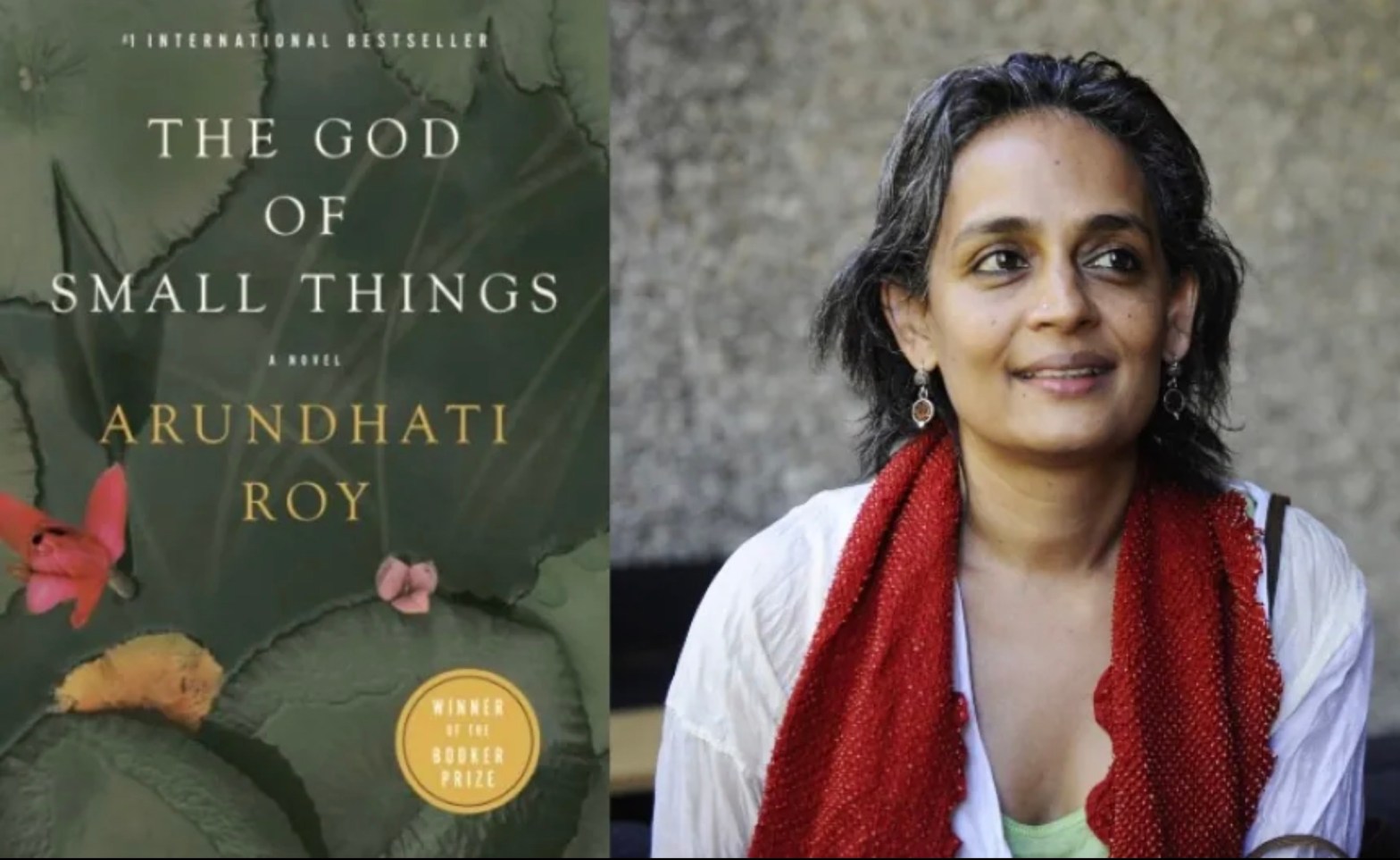
The God of Small Things is a family drama novel written by Indian author Arundhati Roy. Her debut novel published in 1997, the book covers the childhood experiences of fraternal twins, Estha & Rahel, whose lives are significantly impacted by the “Love Laws” prevalent in 1960s India – basically, the societal regulations behind who one could marry and be with.
Arundhati Roy is an Indian writer who is also an activist who focuses on issues related to social justice and economic inequality. In addition tor winning the Booker Prize in 1997 for her novel, Roy also received the Cultural freedom Prize from the Lannan Foundation in 2002.
The story is set in Aymanam, India – offering a disjointed narrative as it shifts between 1969, when the fraternal twins are 7 years old, and 19993, when they are reunited.
The novel spends a lot of time discussing Indian politics and caste relations in the latter half of the 20th century. Roy evaluates the post-colonial world India finds itself in, and the views Indians have towards their former British colonists. The novel explores an inferiority complex between Untouchables and Touchables in Ayemenem through the character of Vellya Paapen, who is willing to kill his son, Velutha, when he discovers that Velutha has inter-caste sexual relations.
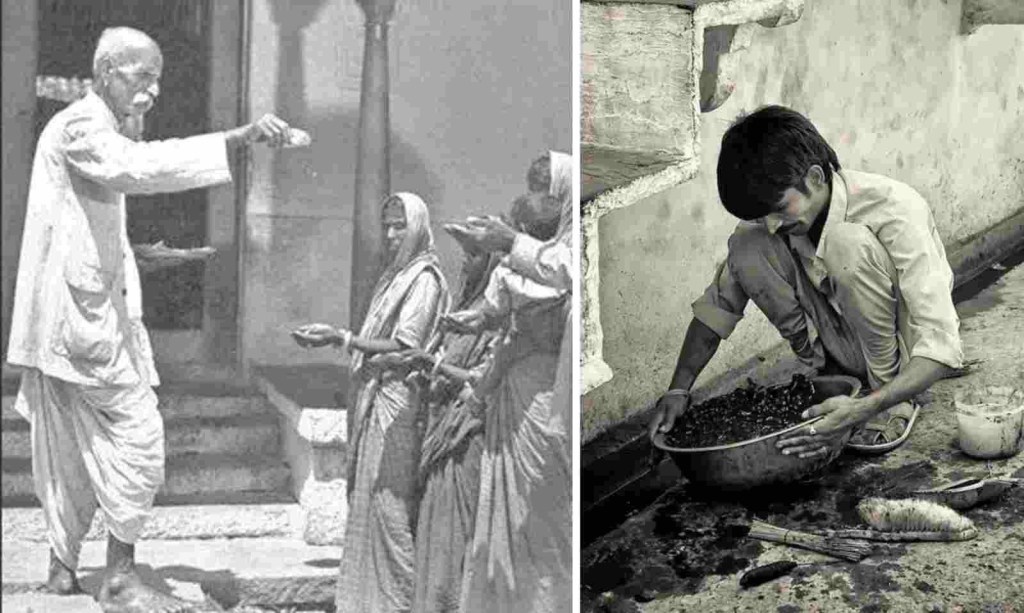
There is a lot here – and far too much that I have time to discuss in this short blog post (if you cannot tell from my scattered train-of-thought writing). What I think is most beautiful about her story is how Roy examines every character with a genuine warmth. Their motivations, insecurities and unfulfilled dreams are offered to the reader with the upmost care in service of depicting a universal human tragedy. Ironically, the “small things” that the novel depicts have huge consequences for the individual characters in the history. For example, the loss of young Baby Kochamma’s love – an Irish Catholic priest – comes to define the rest of her life as a bitter, spiteful, and lonely woman.
I think the idea that small events can play a significant role in the trajectory of one’s life is quite compelling – and it emphasizes the significance of cultural precedent on the path of the people encompassed by it.
This concept becomes even more interesting when I apply it to the many experiences I had with locals in India. Nearly all of the interactions I had were with people who genuinely wanted to offer me the best side of their country – from smiles & hellos, to store owners always willing to help me with directions, to patrons offering to pay for my meals at restaurants. Never, in these gestures of kindness, was there a quid pro quo involved – and that level of generosity was quite unique to my time in India. I believe each of these people understand how powerful these “small” gestures can be in impacting a person’s experience – and how these individual experiences can build to have a tremendous influence on a person’s life.
One day, I was on a bus headed back to Agra and I met an Engineering student studying in Delhi. After getting to know him a bit, I asked him, quite perplexed, “Why are Indians so kindhearted and generous to me, never asking for something in return?”. And he told me, simply and quite proudly, that India has a tradition and culture of giving. He went on to explain that a critical part of Indian culture is that it is very, VERY, important to respect others, particularly those who are in need (ie. including foreigners).
A few days later, during Holi, I met a guy around my age celebrating on the street. After smearing some dye on each others’ faces, I told him how much I liked his hat. He immediately proceeded to take his hat off and put it on my head. I quickly reacted, taking it off and handing it back to him – insisting that I couldn’t take it from him. After a few minutes of this back and forth, he said to me that there is a saying in India: “Atithi Devo Bhava,” meaning a Guest is equivalent to God. He said that hospitality was more important than anything to him, and that it brought him immense joy, on Holi, to offer generosity to a guest in his country.
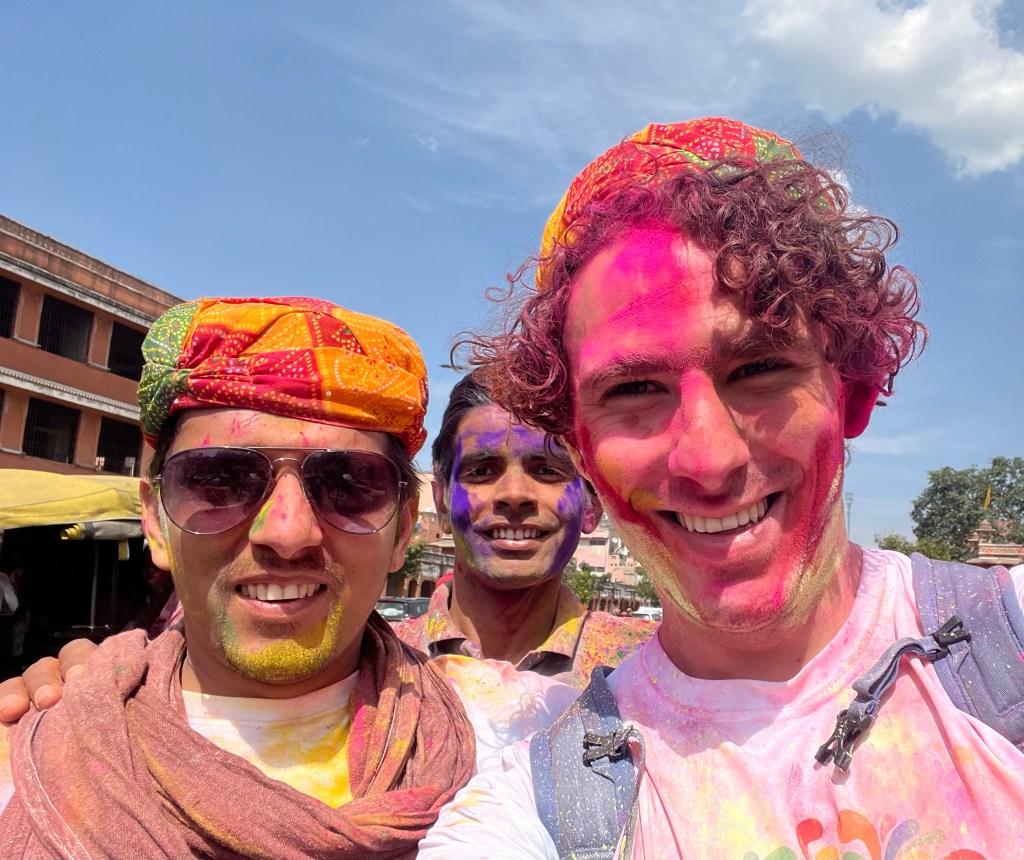
I will end my monologue here as I need to pack for my flight to Lukla tomorrow morning to start the EBC trek. But I hope that in these last few posts I was able to depict how wonderful I found India to be – in the environments and food, but especially in my interactions with the people that make up the country. I know I only got a taste of what the country has to offer – and its a place I know I will be returning to.
Over the next couple weeks, I will be reading Arresting God in Kathmandu by Samrat Upadhyay.
See you then.
Sam
 Sam on Sabbatical
Sam,
Not only will you be well traveled, but we’ll read too! Your experiences with people are wonderful.
LikeLike