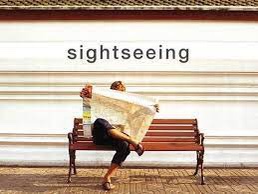

A quick google search for top vacation destinations will frequently turn up Thailand. The mountainous cultural hub in the north, the relaxed picturesque islands in the South, the bustling chaos of Bangkok – the country has it all. Head over to your local bookstore and you will inevitably discover numerous guidebooks and works of fiction written about Thailand by Westerners who have either moved or vacationed to the country. Unfortunately, there is not much fiction written in English by a Thai author – which is why I was excited to find Sightseeing by Rattawut Lapcharoensap. A collection of short stories about Thailand, Sightseeing tackles the dichotomy between Thailand the Tourist Destination and Thailand the country.
While Lapcharoensap was born in Chicago, he was raised in Bangkok. His first book, “Sightseeing” was published in 2005 and was selected for the National Book Foundation’s “5 Under 35” program and won the Asian American Literary Award.
The first story, “Farangs,” is about a young adult who works with his mother at a beach motel and is always falling for the Western women tourists who pass through the area.
The next story is about a set of brothers whose father has died and their mother has sunk into a depression and is called “At the Cafe Lovely.” The older brother self-medicates through rather destructive behavior and the younger brother, the narrator, wants to tag along and get out of the house that their mother’s depression looms over.
In “Draft Day”, particularly relevant today given the May 14 election, the military government trumpets its efforts at rooting out corruption.
In “Sightseeing,” a young woman and her mother take a trip to see a famous island before the mother loses her eyesight.
“Priscilla the Cambodia” offers a very frank picture of the xenophobia that is endemic in Thai culture. Two young boys start off by throwing rocks at the shanties occupied by Cambodia refugees. Eventually they befriend a young girl who lives there and it opens the young boys eyes, even just slightly, to their shared humanity.
“Please Don’t Let Me Die in This Place” is told from the perspective of an older man, whose health is failing, who has moved to Thailand because his son had married a Thai woman. He ruminates on why his son had to marry someone from a different culture, gets upset that his grandkids and daughter-in-law don’t understand him.
The final story, “Cockfighter,” is told from the perspective of a girl as her father, once the best cock fighter in the village, falls from prominence and into debt at the hands of the village headman’s son who feels personally slighted when he loses.
Each of these stories offers a view at the intersection between Thai culture and Thai tourism. For someone who was introduced to thailand as a paradise and the Land of Smiles, this collection offers a darker side of the country, while also bringing to light the role of humor and self-resiliency.
This is how we count the days. June: the Germans come to the islands — football cleats, big T-shirts, thick tongues — speaking like spitting. July: the Italians, the French, the British, the Americans. The Italians like pad thai, its affinity with spaghetti. They like fabrics, sun glasses, leather sandals. The French like plump girls, rambutans, disco music, baring their breasts. The British are here to work on their pasty complexions, their penchant for hashish. Americans are the fattest, the stingiest of the bunch.
Rattawut Lapcharoensap
The stories are a mix of stereotypes of foreigners and the complicated relationship between the tourist and the local; loss, nihilism, drug use, and fast food. In many ways, its a larger representation of my perspective vs. the local perspective over the past 6 months. It brings up the question – how do I be a good tourist?
It’s a tough question for me. Is it enough to have a broad understanding of the country’s history, language culture, religion, etc..? How do I know what is a traditional experience and what is exploitative? How to I balance my excitement for new opportunity with an appreciation for my privilege in experiencing them? And what do I do when I, inevitability, screw it up (I am only human!).
I think the most powerful pieces of advice I heard on how to navigate visiting a foreign country was this: “travelers must keep in mind that they are only borrowing places from local residents”.
I like this because it doesn’t threaten or accuse – but simply reminds me, as a traveler, of my role in a foreign country. The opportunity to travel is a privilege, not a right, and it must be treated with respect and gratitude. It isn’t enough that I saved up money for a trip or took time off of work or stuck myself on a godawful 12 hour plane ride – the simple fact that I can travel and have the means to do so is a venerable opportunity.
Of course, throughout a trip, I am bound to make mistakes – forgetting to wear conservative clothing at a religious sight, buying something at a tourist shop rather than a local market, etc… we all do it – and its not worth beating myself up over. But I believe it is something I should actively strive against, and something I should learn from as I strive to be a better traveler.
Over the past 6 months, I’ve come along some approaches that have helped me:
- Respect the people who live there
- Do your research. Have a broad understanding of a nation’s culture, religion, language, and history.
- Learn basic words in the local language – yes, “hello”, “thank you”, and “I’m sorry” can be enough. A few words go a long way.
- Eat, shop, and sleep at local places whenever possible.
- Save time to visit the less touristy locations, even if they’re a bit less instagram-worthy or more difficult to find.
- Follow the rules – this includes no jaywalking (unfortunately…)
- Keep the environment in mind – when possible, choose buses, ferries, and trains over planes or private cars.
- Treat other travelers with respect
- Reflect, adapt, and grow.
Overall, I think the most important rule – and the one I fall back on when all else fails – is to simply lead with respect. Respect to locals, respect to fellow travelers, respect to the environment. Respect and good intention goes a long way in telling a foreign community of people that you are grateful to be here. It’s not a get-out-of-jail-free card or an excuse for error, but rather a mindset that exudes cultural competence and courtesy. And when you do screw up, embrace it, own it, learn from it, and move on. More often than not, this puts locals and fellow travelers at ease.
For Thailand, in particular, I think it was important for me, as a tourist, to remember that the country is both a magical wonderland of adventure and an amalgamation of cultural heft and political uncertainty.
Until 22 May 2014, the government of Thailand was conducted within the framework of a constitutional monarchy, where the prime minister was the head of government the monarch was the head of state, similar to in the UK. In 2014, Thailand faced a coup d’etat by the military organization, the National Council for Peace and Order (NCPO), who revoked the constitution, abolished the national assembly, and assumed the legislative branch. From then on, much of the legal system was run under martial law in the military courts. The NCPO was formally dissolved following the swearing-in of the new cabinet in July, 2019. To date Thailand has had 20 charters and constitutions, reflecting a high degree of political instability. Just today, following the 2023 election cycle, Thailand’s opposition leader, Pita Limjaroenrat, said he was ready to become the next prime minister, after his Move Forward Party finished first in an election that crushed parties allied with the military-backed establishment.
Knowing this further reinforced my appreciation and respect for the Thai people, in continuing to both maintain their livelihoods and share it with others. It helped me better understand what norms to expect in the country and why it was the case. For example, it is incredibly inappropriate to ask anyone (including tour guides) about their opinion of the monarchy. Why? you may ask? Well because Section 112 of Thai Criminal Code currently reads: Whoever defames, insults or threatens the King, the Queen, the Heir-apparent or the Regent, shall be punished with imprisonment of three to fifteen year.
Basically, don’t talk about the monarchy.
It’s these sorts of things that I believe are essential to understand as a tourist – it helps you better respect the space you spend time in and helps you understand how to approach a foreign region.
It’s so fascinating to see how different countries operate – how one thing on one side of a border has an entirely different cultural/political interpretation on the other side. I guess its in part what fascinates me so much about travel – and why I wanted to experience so many different places on my trip. I love to watch the transition & intermingling of culture/politics/religion/language/customs as I move from region to region. I love finding the differences in each of these identities – and I love finding the similarities that make us all people.
Maybe that’s what truly makes a good traveler – looking, not touching – observing, absorbing… growing an identity that encompasses what is different from myself. Becoming more – not better, not worse – just more.
Next week, I will be reading my last book, Norwegian Wood, by Hanukkah Murakami.
See you then,
Sam
 Sam on Sabbatical